Showing posts with label journalism. Show all posts

Saturday, June 27, 2015

Five So-called Internet Laws to Remember

Dealing with game journalism is not an easy task. The medium is so diluted that the previously deep journalism in even the shallow enthusiast press has devolved into a cesspool of clickbait articles and Buzzfeed lists.

With that in mind, it's important not just for journalists but readers to remember these five internet "laws" that will inform how you view argumentation on the internet.


1. Cohen's Law - This was framed originally by Brian Cohen, and is phrased like this:

Whoever resorts to the argument "whoever resorts to the argument that... has automatically lost the debate" has automatically lost the debate.
It is generally accepted that claiming this argument only insists that you are correct and your opponent is wrong, and is obviously not a good argument to make.


2. Poe's Law - Originally phrased by Nathan Poe. This law is an interesting one, especially in light of Godfrey Elfwick, the notorious Twitter hoaxer who has appeared to actually hold transracial and highly radical feminist views. He was so good at it that the BBC had him on one of their programs to describe how Star Wars was anti-woman and racist. Poe's Law is in full effect. This was previously mentioned in 1983 by Jerry Schwarz. He wrote:
Avoid sarcasm and facetious remarks.
Without the voice inflection and body language of personal communication these are easily misinterpreted. A sideways smile, :-), has become widely accepted on the net as an indication that "I'm only kidding". If you submit a satiric item without this symbol, no matter how obvious the satire is to you, do not be surprised if people take it seriously.
People can not distinguish satire, parody, and sarcasm on the internet without some indication of it. The modern usage is (sarcasm) or /sarcasm.

Generally, Poe's Law is written as:

Without a clear indicator of the author's intent, parodies of extremism are indistinguishable from sincere expressions of extremism

3. Godwin's Law - Originally phrased by Mike Godwin. This one is particularly poignant given recent events in gaming. Generally, it is used in internet debates to acknowledge the desire by people to compare their enemies or people they disagree with Hitler or Nazis:
As an online discussion grows longer, the probability of a comparison involving Nazis or Hitler approaches 1
As internet "controversies" rage, the internet press machine has resorted to this time and again in regards to gamers. It never makes your argument look good to compare a group to Nazis, it only makes your position look weak.


4. Shank's Law - This one is rather obscure, but it nonetheless important. Having been in academia myself, I can verify it's claims:

The imaginative powers of the human mind have yet to rise to the challenge of concocting a conspiracy theory so batshit insane that one cannot find at least one Ph.D holding scientist to support it.
Many sites use it as a form of an appeal to authority fallacy, which is accurate.


5. Danth's Law - This law is one that fascinates me. Apparently the users of RPG.net had a user named Danth who got into arguments and one such argument led to the creation of this law.

If a person has to insist they won the argument, they have probably lost it.

This one is particularly telling given the nature of online discussion. As these gaming controversies rage people insist they're "winning" and "have won". Never announce your own victory, it looks foolish when you do it.


So there you have it. Five internet laws that are helpful to understand not only human nature but the modern climate in gaming.

Saturday, June 20, 2015

Review: "Over 12,000 sign petition to cancel Metroid Prime: Federation Force" by Dan Pearson, GameIndustry.biz

Original article here.


I am an avid reader of GameIndustry.biz. I like reading more about the industry of games than the political coverage or enthusiast press coverage of games. Typically, GameIndustry.biz tries to remain impartial as to the arguments of gamers and the game journalists (read: the Mass Effect 3 fiasco and GamerGate). Though to be honest, their coverage as of late has mimicked the coverage one might expect on Kotaku. This article is no different.

It starts out promising, as coverage on a simple petition about games should:
Incensed 'fans' call forthcoming 3DS game an "atrocity"
A petition seeking to halt the development of Nintendo's Metroid Prime: Federation Force, a 3DS title which was announced during the firm's E3 Digital event, has passed 12,000 signatures in just 2 days, rapidly approaching its goal of 15,000.
This is factual and simply explaining the situation. However, the subtitle putting quotes around "fans" is confusing to me. Is the author suggesting these people petitioning Nintendo due to their deep-seated respect for the Metroid Prime series aren't fans?

Then the author does something that should be avoided in most cases when reporting on a controversy:
Currently, it's slated for a 2016 release. Frankly, it doesn't look like a classic, but The Internet is furious.
He invokes the internet. No, Pearson, the internet is not furious. The internet is either a collection of networks for computers to interact on or a group of people. If you mean the group of people, a small number of them know what Metroid Prime: Federation Force is and an even smaller number actually care one way or the other.

After he quotes from people on the petition (fans who are angry that the game they waited for is being sidelined for a multiplayer party game), he gives his opinion on the matter. I will say it's perfectly acceptable for him to do this. He's presented the petition's argument, so now he's going to present his own and contrast them.
Maybe there's some justification for frustration, given that many feel Nintendo put on a relatively weak E3 performance overall. Given that it's been five years since the last full Metroid release, perhaps fans do have a right to be upset that a not-brilliant looking spin-off on 3DS, rather than a full-scale Wii U game, is being put out under the Metroid masthead. You could argue that, finally, people have lost patience with the endless reworking of old IP - even that they have a right to be disappointed after the wonderful Splatoon reminded them of what the company can do when it finds its inspiration. But really, atrocity?
Unfortunately it starts from a poor place. Complaining about the language and not the argument is a problem. If he had left that little bit out this might have been a good paragraph, but it gets much worse:
So entitlement, particularly amongst fans, is nothing new. One of the consequences of the democratisation of mass media is that there are more messages to be heard, that previously relatively isolated opinions become movements - sometimes for good, sometimes for ill. Is there a lesson to be learned by Nintendo here? A warning to heed? Perhaps.
Yes, "entitlement". I'm getting flashbacks to IGN's (at the time) Colin Moriarty openly crapping on Mass Effect fans who hated the ending to the third game. These "movements" as he puts them, are connected to entitlement. He doesn't explain the connection, he just makes it. I really really don't like this. It removes any blame from Nintendo that he might have given in previous paragraphs and puts it directly on the fans of the series.

He ends with this:
But there's definitely a very clear snapshot of the power of consumer feeback [sic] which increasingly surrounds the industry - and the need to find a way to either appease or mollify it. Generally, it behoves the companies involved to do their best not to acknowledge the anger of what is almost always the minority of its audience, but Nintendo might not currently have that luxury. Whether it's a reflection of the sentiment of the wider fanbase is debatable, but the firm's reaction could be pivotal to the perception of its position.
Which is better. It is true the angry fans in one of these controversies are typically the minority. But minority of what? Fans? I suspect most Mass Effect 3 fans were upset at the ending of the game, but only the ones willing to pour their time into that anger took to social media to demand BioWare do something about it. Saying these people are the minority does them an injustice, because it marginalizes their concerns. The real number of people pissed about Nintendo's decision could easily be the majority of people who wanted a new Metroid Prime game and not a robot soccer game. There's honestly no way of telling, but I would say that a huge number of angry people willing to take time out of their day to complain about anything on the internet proves that there is an even larger group angry and unwilling to engage with you.

So ultimately Pearson does a good job. I don't give numerical ratings for these journalist/blogger pieces, but he did well. I may complain about the use of "entitled" and the marginalization of fan concerns, but he didn't do as bad as some of the clickbait sites.

Friday, June 19, 2015

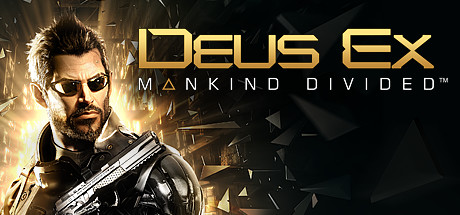
Review: "Deus Ex dev doesn't take kindly to criticism of 'Mechanical Apartheid' marketing term" by Andrew Eisen, Gamepolitics.com

Original article found here.

This may be the worst article on the entire "apartheid" idiocy I've seen so far. Read my previous analysis of the articles, if you want, it's not required reading to understand this post.

Let's begin with the opening statements:
"Apartheid," like "holocaust," is a noun with a specific meaning.  It is also, like "holocaust," very heavily tied to a specific part of our world's history.  Holocaust may mean "loss of life through fire" but when we hear the word we can't help but think of the millions of Jews exterminated by Nazis during World War II.  Likewise, "apartheid" directs our brains to the legally enforced political and economic inequality non-whites suffered in South Africa from the late 40s to early 90s.
People use both terms all the time when referring to things other than the historical holocaust and South African apartheid. I don't see where you're coming from. You haven't made an argument against the usage of the term "mechanical apartheid" to describe the game Deus Ex: Mankind Divided. In fact, you've only said that a general "we" and "our brains" thinks of bad things when those bad words are used. So obviously we shouldn't ever use those words to refer to bad things?

So let's look at the next section:
Both events those words inevitably make us think of are some of the most horrible parts of our recent history so perhaps it's not too surprising that a few would find "Mechanical Apartheid," the marketing term Square Enix is using for its upcoming game Deus Ex: Mankind Divided, to be eyebrow raising enough to tweet about the appropriateness of its use.
Okay. I see what you're doing. By saying it's a "marketing term" you're conflating the ideas of profit or business with the use of mature terms to explain mature themes. Because it's a "marketing term" it's not okay to use. However, that's not all this is. This is the theme of the game. The game is about this subject of mechanical apartheid, in which the augmented humans are treated as second-class citizens and herded into ghettos. It's a horrible situation, and Deus Ex is exploring it. Aren't you always complaining that games aren't being taken seriously? Here's a serious issue for games to tackle, and you're complaining about it.
A couple days ago, Gilles Matouba, who identifies himself as the former game director of Mankind Divided at Eidos Montreal, took to the Kotaku in Action subreddit to explain the genesis and intent behind the term which he (a black and French man) and Deus Ex brand director Andre Vu (an Asian and French man) created a few years ago and Square Enix subsequently trademarked.  It's an interesting read but that's not the part that seems to have captured most's attention.

So the game developer comes forward and explains that he's not a white guy like people on Twitter were saying and complaining about, but apparently it's not okay. Do you still think he shouldn't have used the term "apartheid"?

And that's not even the problem here. The problem is that the author then goes through and paints it as if the developer was being petty in responding to those complaints. See for yourself:
I honestly couldn't figure out who these "bloggers and tweeters" were.  My Google fu came up with no articles opining on the appropriateness of the "Mechanical Apartheid" marketing term and my search of Matouba, Edios and Square Enix's Twitter mentions came up with nothing that struck me as meriting such an indignant response.
This is insanity. He then posts a long list of tweets that the developer could have been replying to. Going through and saying you can't figure out who he's replying to, then posting a bunch of tweets that could be what he was replying to is self-contradictory. But worse, as I mentioned above, it paints the developer as being petty for replying to these complaints. And then after all the examples the author lays out, he makes himself seem petty by complaining about
And that's it.  So far as I've been able to determine, these are the messages that Matouba felt were "beyond mere insults" that "degraded" and "erased" his "identity as a black developer."
I feel it's worth noting that none of the above tweets copied Matouba, Eidos or Square Enix (although one tweet did use a #SquareEnix hashtag) and so far as I've seen, no one has felt strongly enough about "Mechanical Apartheid" as a marketing term to do anything more than tweet about it.
I'm sure these tweets aren't the sum total of everything said criticizing the term but I don't think it's unfair to assume that these are the most inflammatory examples.
And there you have it. Because the author couldn't find any bloggers who said anything, clearly the developer was wrong to reply to the tweeters and mention bloggers. Forget the argument he made, forget that he's black, there's no bloggers so he's wrong.

I just... I can't believe this. Sure, the term "apartheid" has some baggage with it, but to argue a point like this one is complete madness. I like Gamepolitics.com, and I expect better from them.

Thursday, June 18, 2015

Buzzwords in Game Journalism - June 2015 Edition

So it's that time, fellow kids. Time to talk about issues of game journalism beyond simply reviewing their articles and doing a "State of Game Journalism" at the first of the month. Let's talk about over-used buzzwords.

These are words that need to stop being over-used. Try to use a thesaurus and find a different word, or fully explain yourself without relying on these words.

Toxic - this is one creeping up more and more recently from the social sciences and gender studies classes. This word has basically lost all meaning, but originally meant "something that taints or is tainted". It's over-used in certain political circles, and I think that's part of the reason it's being used so much in game journalism now.

Example: "The toxic violence in Call of Duty is training our children to be killers."

Problematic - Another word over-used in certain circles. It's supposed to mean something like, "this thing causes people problems." Unfortunately, the reason why the thing is problematic, and the reason why it is actually an issue are never explored. This word needs to stop being used. It's problematic.

Example: "The avatars for female characters, in particular, are problematic."

Entitled - This is often used for gamers themselves, and said by the journalists to say that the gamers think they deserve something from the industry. Well, yeah. Of course they do. They're the ones paying for everything in the industry. It makes perfect sense that they'd want to get a good quality product, or get something they like. To complain about entitlement is to basically project your own self-worth issues onto your audience.

Example: "Gamers are entitled, they want BioWare to change the ending of their game."

Open World - This game type is no longer what we think it is. Sometimes it refers to exploration-type games, immersive experiences, or sandbox environments. It needs some explaining, especially in what players can expect. Think about it: if every other game that comes out uses the words "open world", players won't understand what that means anymore, or have a faulty understanding. Is this Grand Theft Auto, Skyrim, or Minecraft?

Example: "The entry in The Witcher series is an open world environment with a vast map stretching to twice the size of Skyrim's."

Cinematic - I'm guilty of this one on my YouTube channel. Basically, it means the game feels like a movie. Often this is used ni action movie experiences, but can be used for more dramatic flair. The game Life is Strange is an example to the contrary. It's well-written, has interesting characters, and a great concept. But I don't think it's exactly what people mean when they say "cinematic". I'd say cinematic experiences in games are those that are linear, where a story unfolds the same way every playthrough.

Example: "Uncharted 3 was a wonderful cinematic experience that placed the players in Drake's shoes."


Well those are this month's buzz words. I will join you again soon to discuss the same old article reviews, but I hope to have something on my YouTube channel soon. Thanks for reading you entitled, toxic gamers!